

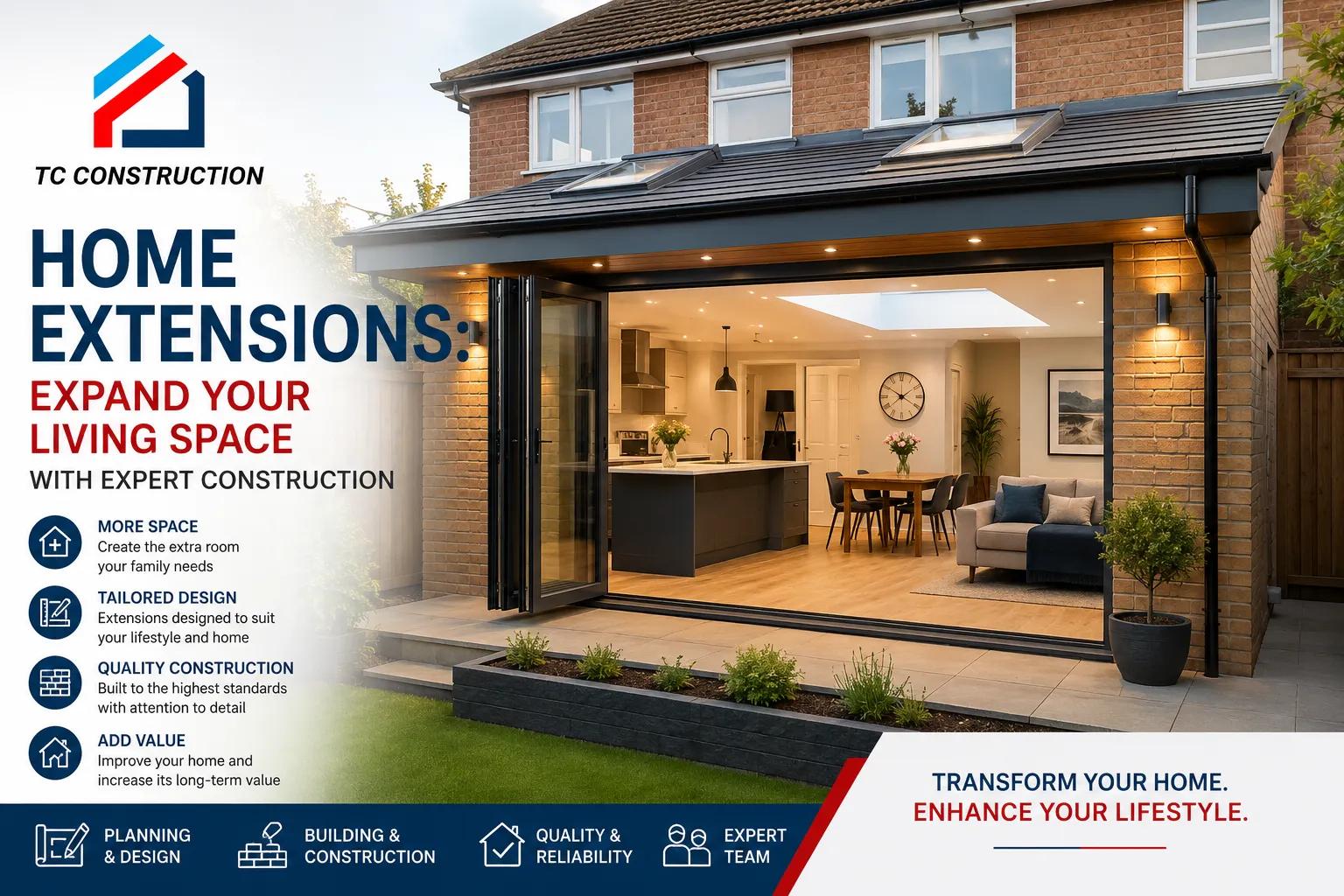
If your current home feels too small but moving is not the right option, Home Extensions can provide an effective way to create additional space while improving the functionality and value of your property. Whether you want a larger kitchen, an extra bedroom, a home office, a dining area, or a more flexible living space, a professionally designed extension can transform your existing property to suit your changing needs.
Why Consider a Home Extension?
As families grow and lifestyles change, the space that once felt comfortable can quickly become inadequate. Moving to a larger property can be expensive and disruptive, while a well-planned extension allows you to make better use of the home you already own.
A home extension can provide additional floor space without requiring you to leave your current neighbourhood. It can also give you the opportunity to redesign areas of your property that are no longer practical.
For homeowners in Mill Hill and North West London, extending an existing property can be particularly useful where homeowners want more space while remaining close to local amenities, schools, workplaces, and established communities.
Creating More Functional Living Space
One of the biggest benefits of an extension is the ability to create a space that is designed around your lifestyle. Instead of adapting your needs to the limitations of your existing floor plan, you can develop a layout that works for you.
A new extension could be used for:
A larger kitchen and dining area
An open-plan family room
An additional bedroom
A home office
A playroom
A utility room
A guest room
A larger living room
A dedicated entertainment area
Additional storage
The right design can make your home feel more spacious and improve the way different rooms connect with one another.
Kitchen Extensions
Kitchen extensions are among the most popular types of home improvements. The kitchen is often the heart of the home, serving as a place for cooking, dining, entertaining, and spending time with family.
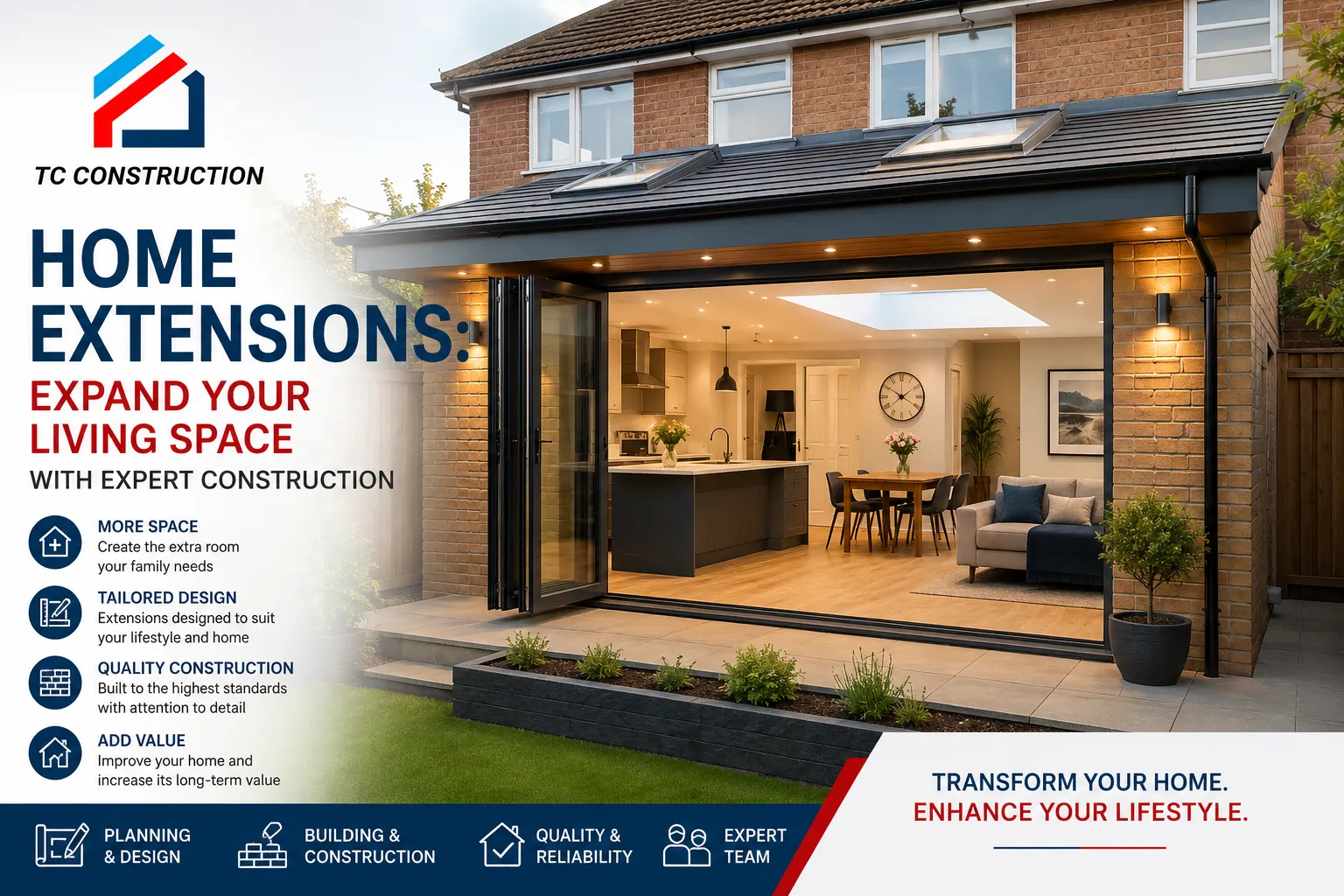
Extending the kitchen can create space for larger worktops, additional storage, modern appliances, an island, or a dedicated dining area. Larger windows, rooflights, and glazed doors can also bring more natural light into the property.
A carefully designed kitchen extension can combine practical functionality with contemporary style. It can also provide an opportunity to update an outdated layout and create a more comfortable space for everyday use.
Once the structural work is complete, homeowners can also consider professional kitchen fitting and finishing to ensure the new space works seamlessly with the rest of the property.
Rear Extensions
A rear extension is a common solution for homeowners who want to increase the size of their ground floor. It can be particularly effective for properties where the existing rear garden provides suitable space for expansion.
Rear extensions can create larger kitchens, dining rooms, family rooms, or open-plan living areas. Depending on the design, the extension can incorporate large windows or bi-folding and sliding doors to create a strong connection between indoor and outdoor areas.
Good planning is essential to ensure that the extension complements the existing property rather than appearing disconnected from it. Materials, roof design, windows, brickwork, and internal finishes should all be considered as part of the overall project.
Side Return Extensions
Side return extensions can be an excellent option for properties with unused space alongside the existing building. This type of extension can help make better use of narrow side passages and increase the usable width of a kitchen or living area.
A side return can be combined with a rear extension to create a significantly larger ground-floor space. This approach can be especially useful when homeowners want an open-plan kitchen and dining area without sacrificing too much garden space.
The design should carefully consider natural light, ventilation, access, and the relationship between the existing property and the new structure.
Planning and Building Regulations
Before starting an extension project, it is important to understand the planning and building requirements that may apply to your property.
Some extensions may fall under permitted development rights, while others may require planning permission. The requirements can depend on factors such as the size and location of the extension, the type of property, previous extensions, and local restrictions.
Building regulations are also an important consideration. These requirements cover areas such as structural stability, insulation, ventilation, fire safety, drainage, electrical installations, and energy efficiency.
Working with an experienced construction professional can help homeowners understand the different stages involved and ensure that the appropriate requirements are considered before construction begins.
Choosing the Right Extension Design
The best extension is not necessarily the largest one. A successful design should make efficient use of the available space while complementing the existing property.
Several factors should be considered during the design process, including:
The available outdoor space
Existing property layout
Natural lighting
Access between rooms
Storage requirements
Heating and ventilation
Window and door placement
Exterior materials
Roof design
Long-term maintenance
A well-designed extension should feel like a natural part of the property rather than an addition that looks separate from the original building.
Improving Natural Light
Natural light can have a major impact on how an extension feels. A poorly positioned extension may create a darker interior, while a carefully designed space can introduce more daylight into both the new and existing areas.
Rooflights, skylights, large windows, glazed doors, and carefully positioned openings can all help improve brightness.
The position of the extension should also be considered in relation to the direction of sunlight throughout the day. Good design can help create a bright, welcoming environment without compromising privacy or comfort.
Quality Materials and Workmanship
The quality of materials and workmanship plays an important role in the long-term performance of an extension. Structural elements, insulation, roofing, windows, doors, flooring, and internal finishes all need to be installed correctly.
Using suitable materials can help improve energy efficiency, durability, and appearance. Quality workmanship also helps reduce the likelihood of problems developing after the project has been completed.
For homeowners, choosing an experienced contractor is therefore an important part of the planning process. It is worth considering experience, previous projects, workmanship, communication, and the range of services offered before making a decision.
Making Your Extension Energy Efficient
Modern extensions can be designed with energy efficiency in mind. Good insulation, energy-efficient glazing, suitable heating systems, and effective ventilation can all contribute to a more comfortable home.
Large areas of glazing can provide excellent natural light, but they should be carefully specified to help maintain comfortable indoor temperatures throughout the year.
Energy-efficient construction can also help reduce heat loss and potentially lower household energy consumption over the long term.
How an Extension Can Add Value
A well-designed extension can potentially increase the appeal and value of a property by providing additional usable living space.
However, the value added will depend on factors such as location, property type, extension quality, size, design, and the needs of potential buyers. The goal should therefore be to create a space that genuinely improves the home rather than simply adding floor area.
A practical, attractive extension that improves the property's layout can make it more enjoyable to live in while also supporting its long-term market appeal.
Choosing a Professional Home Extension Contractor
An extension involves several stages, from initial planning and design through structural construction and interior finishing. Having an experienced contractor can make the process easier to manage.
A professional team can coordinate different aspects of the project and help maintain consistency from the beginning of construction through to completion. Clear communication is also essential so that homeowners understand the work being carried out, expected timescales, materials, and project requirements.
For homeowners considering an extension in Mill Hill or North West London, selecting a contractor with experience in residential construction and refurbishment can provide greater confidence throughout the project.
Transform Your Existing Home
A home extension is more than simply adding extra rooms. It is an opportunity to rethink how your property works and create a home that better reflects your current lifestyle.
Whether you are looking for a larger kitchen, an open-plan family area, an additional bedroom, a dedicated home office, or simply more space for your family, the right extension can provide a practical long-term solution.
From design considerations and planning requirements to structural work, insulation, windows, roofing, plumbing, electrical systems, and interior finishes, every part of the project needs careful attention. With the right planning and professional workmanship, an extension can become a seamless and valuable addition to your property.
For homeowners looking for reliable and professional extension services in Mill Hill and North West London, TC Construction Ltd can help turn your ideas into a practical, stylish, and functional extension designed around your home and lifestyle.